
















































































Unblocked Games 76: How It Works, Risks, and Better Gaming Options

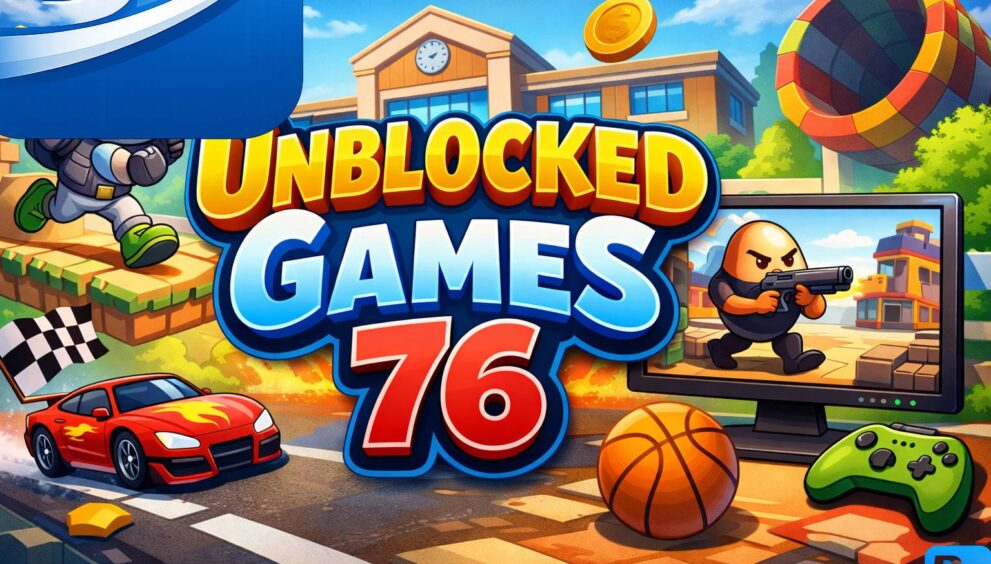
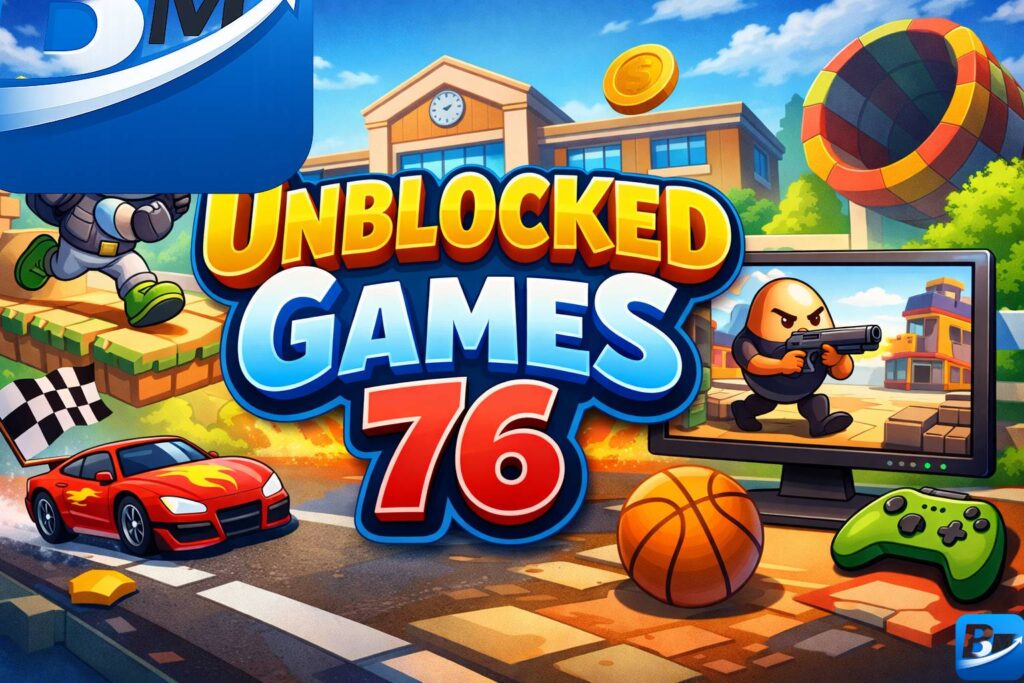
Unblocked Games 76 refers to a browser-based gaming website that hosts simple online games designed to bypass network restrictions commonly found in schools and offices. Students often search for it when traditional gaming platforms are blocked by administrators. The appeal is straightforward. It requires no downloads, no installation, and usually runs directly in a browser window using lightweight code.
From an informational standpoint, people want to know whether it is safe, legal, and worth using. Parents and educators also question how it works and whether it exposes users to security risks. This article examines how the platform operates, what kinds of games it provides, the potential concerns involved, and what safer alternatives may exist.
What Is Unblocked Games 76 and Why Do Students Use It
Unblocked Games 76 is a web directory that mirrors or embeds free browser games so they can be accessed on restricted networks. Schools typically block large gaming domains, but smaller mirror sites sometimes remain accessible. These platforms host HTML5 or older Flash-based games on alternative domains to avoid filtering systems.
Students use it mainly for convenience. During breaks or free periods, they look for quick entertainment without installing software. Games are usually short, simple, and easy to load on low-powered devices like school Chromebooks. Titles often include puzzle games, arcade runners, and strategy games that do not require accounts or payments.
Another reason for its popularity is simplicity. Unlike platforms such as Roblox or Fortnite, these games do not require updates or high-speed internet. They load instantly and can be closed just as quickly. That convenience explains its consistent search demand.
However, users often assume that because it is accessible, it is officially allowed. Accessibility does not automatically mean permission. Many networks block gaming sites to maintain productivity and bandwidth control, not because the games themselves are illegal.
How Access to Unblocked Games 76 Works
Unblocked Games 76 is typically accessed through alternative web domains that mirror or embed browser-based games. These domains are created to bypass network filters used in schools or workplaces. Instead of hosting large downloadable files, the site loads HTML5 or JavaScript games directly inside the browser, which makes access fast and device-friendly.
How Students Find It
- Through direct URL entry shared by classmates
- Via search engines when the main domain is blocked
- Through updated mirror links when previous domains are restricted
- By bookmarking working versions before filters update
Because school firewalls regularly block known gaming sites, mirror domains frequently change. Users often search for updated versions when access stops working.
How Network Restrictions Are Bypassed
- Hosting games on less obvious or newly registered domains
- Embedding games from third-party sources instead of hosting them directly
- Using simple site structures that do not trigger automated filters
- Avoiding large media files that consume high bandwidth
This does not mean the site overrides security systems directly. Instead, it remains accessible until administrators manually block the domain.
Device and Browser Requirements
- Works on Chromebooks, Windows PCs, and basic laptops
- Requires a modern browser such as Chrome, Edge, or Firefox
- Does not require installation or plugins
- Older Flash-based versions are largely replaced by HTML5
Because the games are lightweight, they run on low-spec hardware. However, performance may slow if the site contains excessive advertisements or scripts.
Access Risks and Technical Concerns
- Mirror domains may contain misleading ads or redirect links
- Some sites may request notification permissions unnecessarily
- Unverified domains can change ownership without notice
- School monitoring software can track browsing activity
Users should avoid downloading files, entering personal information, or granting browser permissions on such sites.
Institutional and Policy Considerations
- Schools and workplaces often block gaming to maintain focus
- Accessing mirror domains may violate acceptable use policies
- Repeated attempts to bypass filters can result in warnings or restrictions
- Network administrators may log browsing activity
Access does not automatically imply permission. Even if the site loads successfully, users remain subject to institutional rules.
Privacy and Data Handling
- Free gaming sites usually rely on advertising networks
- Cookies may track browsing behavior for ad personalization
- There is typically no transparent privacy policy enforcement
- Data handling standards vary between mirror domains
For long-term safety, accessing games on personal devices and trusted networks is more secure than using restricted institutional connections.
Is It Safe and Legal to Access at School or Work
In most cases, accessing such platforms is not illegal, but it may violate institutional policies. Schools and workplaces establish acceptable use policies for their networks. Bypassing restrictions, even through simple mirror domains, can lead to disciplinary action if detected.
From a cybersecurity perspective, safety varies. These sites are not regulated marketplaces. Some mirror domains may display aggressive ads or redirect users to unrelated pages. This increases exposure to malicious scripts, misleading download prompts, or phishing attempts.
Another risk involves outdated technologies. Some legacy versions relied on Adobe Flash, which has been discontinued. Modern versions use HTML5, which is safer, but security ultimately depends on the host site’s integrity. Unlike curated platforms such as Minecraft hosted on official servers, mirror gaming sites operate independently and without strong oversight.
Users should also consider privacy. Free gaming sites often monetize through advertising networks. That may involve cookies or tracking technologies. While not inherently harmful, it reduces control over personal browsing data.
What Types of Games Are Available and How Do They Work
Most titles available through Unblocked Games 76 are lightweight browser games built with HTML5 or JavaScript. They load directly inside a web page and do not require installation, accounts, or powerful hardware. This makes them accessible on school Chromebooks and older desktops, which explains their consistent demand among students.
Below are common examples frequently found on these platforms:
-
Run 3
-
Slope
-
Happy Wheels
-
Shell Shockers
-
Basketball Legends
-
1v1.LOL
-
Moto X3M
-
Tunnel Rush
-
Friday Night Funkin’
-
Super Smash Flash 2
These games typically function without saved progress. They are session-based, meaning once the browser tab closes, progress is lost. That design reduces server dependency and makes hosting easier across multiple mirror domains.
A common mistake users make is assuming these are official releases. Many are simplified browser versions or fan-made adaptations rather than original publisher-hosted titles. Quality and security therefore vary depending on the domain hosting them.
What Are the Risks and Limitations
The main limitation is reliability. Mirror domains frequently change URLs when blocked by network filters. This leads to confusion about which site is legitimate and which may be unsafe. Impersonation sites sometimes appear, mimicking known layouts while embedding harmful ads.
Another issue is distraction. Educational environments restrict gaming to protect focus and learning time. Even short sessions can disrupt productivity if they become habitual. What starts as a five-minute break can extend far longer.
Technical risks also exist. Some free gaming sites overload pages with ads that slow devices, especially older school laptops. Excessive scripts can reduce performance or trigger browser warnings.
Finally, there is no support system. If a game crashes or a site injects unwanted pop-ups, users have little recourse. Unlike established ecosystems such as Steam, there is no centralized moderation or customer assistance.
What Are Better Alternatives for Safe Browser Gaming
Safer alternatives exist for users who want entertainment without policy risks or security concerns. The best option depends on whether gaming happens at home, on personal devices, or in controlled educational environments.
For general browser gaming on verified platforms, consider:
-
Krunker
-
Agar.io
-
Slither.io
-
Forge of Empires
-
Town of Salem
For structured ecosystems with moderation and parental controls:
-
Roblox
-
Minecraft
-
Fortnite
For distribution through regulated marketplaces:
-
Steam
-
Epic Games Store
These alternatives provide clearer ownership rights, regular updates, account security systems, and structured moderation. They also reduce the risk of misleading ads or malicious redirects.
Choosing a legitimate platform may require creating an account or installing a client, but the trade-off is stronger privacy protection and technical reliability. For long-term use, that stability is usually worth the extra step.
Conclusion
Unblocked Games 76 exists because network restrictions create demand for easily accessible browser entertainment. It offers simple games that load quickly and require no installation, which explains its popularity among students.
However, accessibility does not guarantee safety, permission, or reliability. The platform operates outside formal oversight, which introduces advertising, privacy, and policy risks. For casual play at home, safer and more transparent gaming environments are available. For school or work networks, respecting institutional policies remains the most responsible choice.