



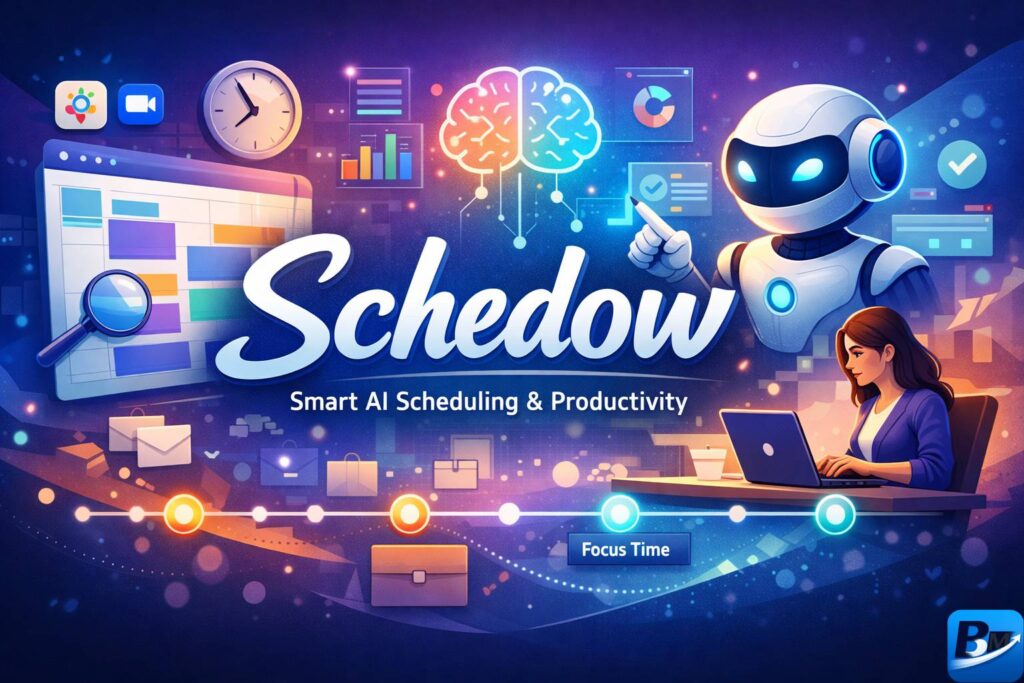
























































































































































Schedow: How It Works and Improves Time Management

Schedow is an AI-powered scheduling and productivity platform designed to help individuals and teams manage their time more effectively. By analyzing work patterns and integrating with calendars, it offers intelligent suggestions for meeting times, focus periods, and task management. Its approach goes beyond traditional calendar apps by emphasizing efficiency and adaptable planning.
In practice, schedow helps users reduce scheduling conflicts and identify optimal periods for focused work. It leverages real-world logic, learning from past behavior to recommend time blocks that balance productivity and collaboration. For organizations, this means meetings are more purposeful, and individual work is less interrupted, improving overall workflow.
What is schedow and how does it work
Schedow functions as a digital assistant for time management. At its core, it connects with popular calendar platforms and analyzes past scheduling patterns. By using AI algorithms, it predicts the most suitable times for meetings, work sessions, and breaks. Users receive suggestions that are actionable without manually rearranging calendars.
The platform works continuously, adjusting recommendations as schedules change. It also prioritizes tasks by evaluating urgency, meeting importance, and personal productivity habits. The logic behind its recommendations is based on patterns rather than generic rules, allowing for personalized guidance. A common mistake users make is treating it as a strict scheduler instead of a flexible tool for planning.
Why people use schedow for scheduling and productivity
People adopt schedow primarily to save time and reduce the friction of manual scheduling. It prevents double-bookings and optimizes overlapping commitments, which can otherwise lead to lost productivity. For teams, it ensures that collaborative sessions happen at moments when participants are most available.
Beyond convenience, schedow helps in maintaining focus. Users often underestimate the impact of fragmented work on efficiency. By automatically creating protected work periods, it reduces interruptions. Many users report that this leads to higher-quality output and fewer missed deadlines. Misunderstanding its purpose can lead to overreliance, expecting it to manage tasks beyond scheduling.
Key features and capabilities of schedow
Schedow integrates with services like Google Calendar, Outlook, Slack, and Zoom, allowing seamless management of both personal and team schedules. It offers automated rescheduling when conflicts arise, ensuring minimal disruption. Focus time recommendations are a notable feature, protecting blocks for uninterrupted work.
Analytics are another core aspect, providing insights into time allocation and identifying areas for improvement. The AI learns from behavior, adjusting future suggestions to improve accuracy. While feature-rich, it’s essential to configure personal preferences correctly; otherwise, suggestions may be misaligned with actual priorities. The platform emphasizes efficiency, not replacement of decision-making.
Common challenges and limitations of schedow
While schedow offers intelligent suggestions, it depends on accurate input data. Calendars must be up to date, and task priorities clearly defined. Without this, recommendations may be suboptimal. Users sometimes struggle with the learning curve of configuring preferences for individual or team needs.
Another limitation is integration consistency. Certain platforms may not support full functionality, leading to partial automation. Additionally, AI suggestions are not infallible; human judgment remains necessary. Treating schedow as a perfect scheduler rather than a supportive tool is a common mistake that can reduce its effectiveness.
How schedow compares to other scheduling tools
Compared to traditional calendar apps, schedow offers dynamic suggestions rather than passive scheduling. Tools like Google Calendar or Outlook rely on manual adjustments, whereas schedow actively optimizes time blocks. When evaluated against other AI scheduling platforms, its focus on analytics and focus-time protection distinguishes it.
However, some competitors may offer more advanced team management features or task tracking integrations. Schedow excels in simplicity and AI-driven recommendations for individual productivity. Choosing between schedow and alternatives depends on whether the priority is personal time optimization, team coordination, or integrated task management.
Conclusion
Schedow is a practical tool for managing time intelligently, balancing meetings, work periods, and breaks. By learning from patterns, it supports efficient scheduling without replacing personal judgment. While not without limitations, its AI-driven approach simplifies decision-making and reduces the friction of planning.
For individuals and teams looking to optimize productivity and maintain focus, schedow provides a structured yet adaptable solution. Understanding its capabilities, configuring preferences, and using it as a supportive tool rather than a strict scheduler ensures long-term benefits and consistent improvement in time management.
Frequently Asked Questions (FAQs)
1. What is schedow and who is it for?
Schedow is an AI-powered scheduling and productivity platform designed for both individuals and teams. It helps optimize calendars, suggest meeting times, and protect focus periods by analyzing work patterns. It is useful for anyone looking to manage time efficiently, reduce conflicts, and improve workflow.
2. How does schedow integrate with other tools?
Schedow connects with popular tools like Google Calendar, Outlook, Zoom, Slack, and Microsoft Teams. These integrations allow automatic updates, meeting scheduling, and notifications, creating a seamless workflow across multiple platforms. Proper configuration ensures the AI suggestions are accurate and actionable.
3. What are the main features of schedow?
Key features include AI-driven time optimization, automated rescheduling, focus time protection, and productivity analytics. The platform learns from past behavior to improve scheduling recommendations and provides insights into how time is spent, helping users plan more effectively.
4. Can schedow replace manual scheduling entirely?
No. While schedow simplifies planning and provides intelligent recommendations, human judgment is still necessary. Users must maintain updated calendars, define priorities, and review AI suggestions to ensure alignment with actual needs and goals.
5. What are common mistakes when using schedow?
Common mistakes include overreliance on AI, failing to update calendars, and neglecting personal preferences. Treating schedow as a strict scheduler rather than a supportive tool can reduce effectiveness. Correct configuration and active engagement are essential for maximizing its benefits.