





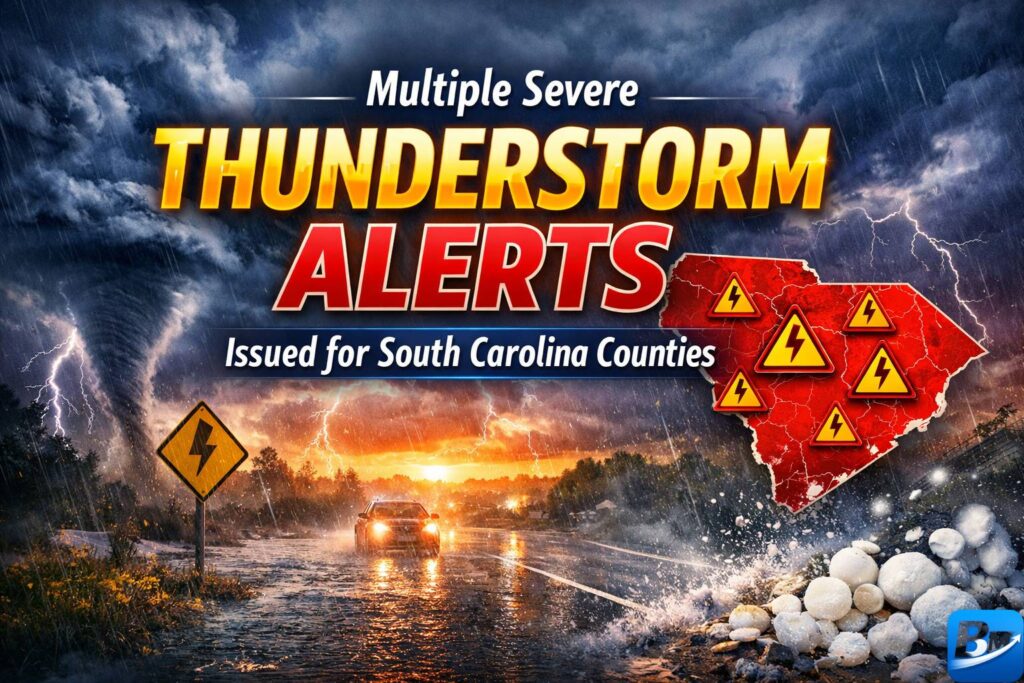






















































































































































Multiple Severe Thunderstorm Alerts Issued for South Carolina Counties

Severe thunderstorms can develop quickly, producing strong winds, large hail, and heavy rainfall that threaten safety and property. Residents in affected areas need timely information to make informed decisions and take precautions. Understanding how these storms form and how alerts are issued helps communities respond effectively and reduce potential hazards.
Multiple Severe Thunderstorm Alerts Issued for South Carolina Counties highlight the regions currently at risk and provide guidance on immediate protective actions. These alerts are based on real-time weather monitoring and serve as an essential tool for public safety during severe weather events.
What Are Severe Thunderstorm Alerts and Why They Matter
Severe thunderstorm alerts indicate that weather conditions could reach or have reached criteria for dangerous thunderstorms. They differ from watches or advisories in urgency and expected impact.
A severe thunderstorm warning means that storms capable of producing damaging wind gusts, hail, or intense rainfall are imminent or occurring in the specified areas. These alerts prompt residents to take immediate protective actions. Watches indicate conditions are favorable for severe storms but do not confirm they are happening.
These alerts matter because severe thunderstorms can quickly cause falling trees, power outages, flash flooding, and other hazards that evolve without much notice. Prepared communities with clear response plans can reduce risks to life and property when alerts are issued.
Which South Carolina Counties Have Been Included in Recent Alerts
Recent severe thunderstorm warnings and watches have centered on parts of central and southeastern South Carolina. For example, warnings have covered areas including Lexington, Richland, Sumter, Calhoun, Orangeburg, Fairfield, and surrounding counties. Alerts often move with storm systems passing through the region.
Coastal and Lowcountry regions may also receive alerts when storm lines shift south. Historical patterns show warnings issued for counties such as Allendale, Beaufort, Colleton, Dorchester, and Hampton during particularly active storm days.
Understanding which counties are included helps residents and local authorities plan ahead. Storm paths and coverage change rapidly, so staying updated on official polygons and expiry times is critical.
How Alerts Are Determined and Communicated
Severe thunderstorm alerts originate from the National Weather Service, which monitors atmospheric data, radar returns, and storm motion to determine when conditions meet criteria for severe weather. For a warning, criteria typically include wind speeds of at least 58 miles per hour or hail of 1 inch in diameter or larger.
Once criteria are met, warnings are disseminated through multiple channels:
- Wireless Emergency Alerts to mobile phones in affected polygons
- NOAA Weather Radio broadcasts
- Local media and weather apps
- Emergency alert systems run by state and county agencies
Officials emphasize proper alert setups because coverage can vary by device and service provider.
Common Misunderstandings About Storm Alerts
One frequent misunderstanding is confusing watches with warnings. A watch signals that severe weather could develop within the next day or so, giving people time to prepare. A warning signals severe weather is happening or about to hit and requires immediate action.
Another misconception is that alerts will reach all devices uniformly. Factors like carrier settings, alert preferences, and county boundary definitions can affect how and when alerts appear. Testing alert reception and following multiple reliable sources improves situational awareness.
What Residents Should Do When an Alert Is Issued
When a severe thunderstorm alert is issued, first verify the type of alert. If a warning is in effect, move to a safe location away from windows, and secure loose outdoor objects that could become projectiles in high winds.
Have an emergency plan that includes:
- A safe interior room or basement for shelter
- A battery-powered weather radio or reliable app for updates
- A communication plan with family or neighbors
Being proactive reduces confusion and risk when weather deteriorates. South Carolina encourages residents to review preparedness plans during Severe Weather and Flood Safety Week.
Conclusion
Severe thunderstorm alerts play a vital role in public safety by providing timely information about dangerous weather threats in South Carolina. Knowing how these alerts are generated, what they mean, and how to act on them enhances community resilience and personal readiness.
Residents should remain informed throughout the storm season, understand the distinction between different alert types, and maintain preparedness plans so that they can respond with clarity and confidence when storms approach. Regularly consulting official sources ensures that decisions are based on accurate, up-to-date weather information.
Frequently Asked Questions (FAQs)
Multiple Severe Thunderstorm Alerts Issued for South Carolina Counties: What do these alerts mean?
These alerts indicate that storms capable of producing damaging winds, large hail, or heavy rainfall are imminent or occurring in specific counties. They help residents take immediate safety precautions.
Multiple Severe Thunderstorm Alerts Issued for South Carolina Counties: Which areas are usually affected?
Alerts often cover central, southeastern, and coastal counties, including Lexington, Richland, Sumter, Beaufort, and Dorchester. The coverage depends on the storm’s path and intensity.
Multiple Severe Thunderstorm Alerts Issued for South Carolina Counties: How are these alerts determined?
The National Weather Service issues alerts based on radar data, storm motion, and atmospheric conditions. Warnings are issued when criteria like high winds or hail are detected.
Multiple Severe Thunderstorm Alerts Issued for South Carolina Counties: How should residents respond?
Residents should move to safe interior locations, secure outdoor objects, monitor weather updates, and have an emergency plan ready for family and pets.
Multiple Severe Thunderstorm Alerts Issued for South Carolina Counties: What are common misconceptions?
A frequent misunderstanding is confusing watches with warnings. Watches indicate favorable conditions, while warnings mean severe weather is imminent or occurring and immediate action is required.