































































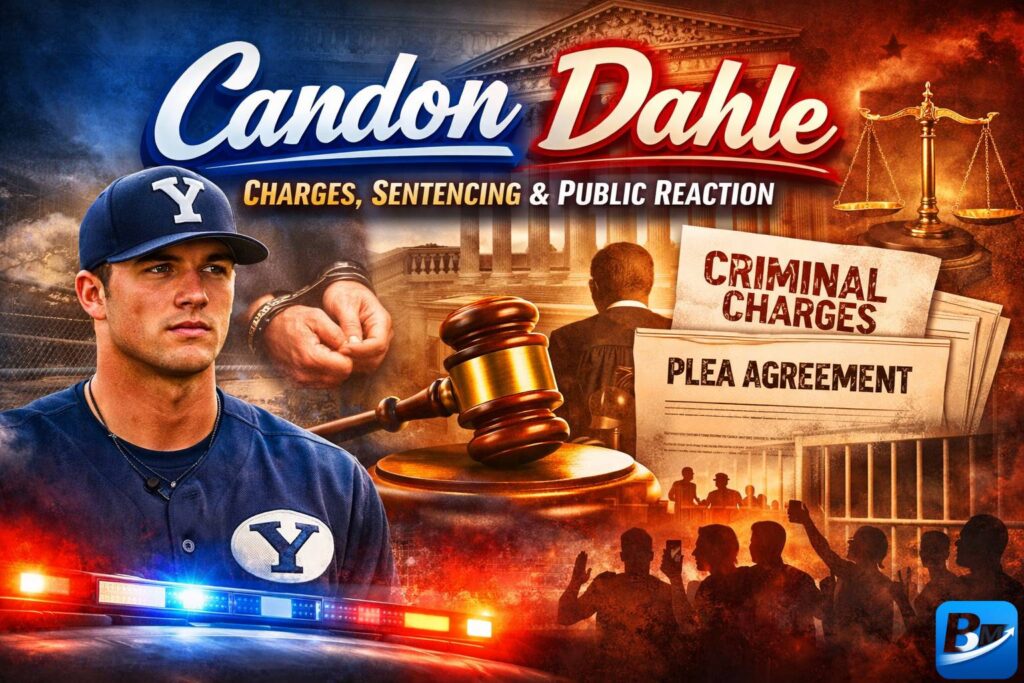































































Candon Dahle: Case Background, Charges, Sentencing, and Public Reaction

When a collegiate athlete becomes the subject of serious criminal charges, public interest expands far beyond the sports world. The name Candon Dahle began trending nationally following legal proceedings in Idaho that shifted the conversation from athletics to accountability, sentencing, and judicial transparency.
This article provides a comprehensive, fact based overview of who Candon Dahle is, the charges filed against him, the plea agreement, sentencing outcome, and the broader public reaction. All information referenced is drawn from high authority news reporting and publicly available court details to ensure accuracy and neutrality.
Who Is Candon Dahle?
Candon Dean Dahle is a former college baseball player from Blackfoot, Idaho. Before his legal case became public, Dahle was known primarily for his role as a pitcher associated with Brigham Young University in Provo, Utah. His athletic background included collegiate level competition and participation in competitive baseball circuits.
During his time connected with BYU athletics, Dahle was part of the university’s baseball roster. However, following legal developments in early 2025, his association with the program ended. His roster profile was removed amid the unfolding criminal case.
At the time of public reporting, Dahle was in his early twenties and had no widely known public profile outside of athletics. The criminal case dramatically altered the context in which his name appears in search results and media coverage.
Arrest and Initial Charges
In February 2025, Dahle was arrested on a warrant related to allegations involving a minor. The arrest reportedly took place in Provo, Utah, though the charges originated in Idaho.
According to reporting by reputable regional outlets including KSL.com and East Idaho News, Dahle faced felony charges in two Idaho counties. The initial allegations involved lewd conduct with a child under the age of 16, which is considered a serious felony offense under Idaho law.
The charges attracted immediate public attention due to several factors:
- The age of the alleged victim
- Dahle’s status as a college athlete
- The severity of the accusations
- The involvement of multiple counties
As the case progressed, legal developments began to reshape the narrative from accusation to negotiated plea.
Legal Proceedings and Plea Agreement
As in many felony cases, the legal process involved investigation, prosecutorial review, and negotiations between defense counsel and prosecutors. Ultimately, Dahle entered into a plea agreement.
Instead of proceeding to trial on the original lewd conduct charges, Dahle pleaded guilty to two felony counts of injury to a child. These charges were considered lesser than the original allegations.
Why Plea Agreements Matter
Plea agreements are common in the United States criminal justice system. They can:
- Reduce uncertainty for both prosecution and defense
- Avoid lengthy trials
- Spare victims from testifying
- Provide a negotiated sentencing framework
However, plea agreements can also spark controversy, especially when the public perceives that original charges were severe and the final outcome appears comparatively lenient.
In Dahle’s case, the plea agreement reportedly included provisions that prevented him from having to register as a sex offender. This factor significantly influenced public reaction after sentencing.
Sentencing Details
Following the guilty plea, the court issued sentencing terms that included:
- Eight years of probation
- 180 days in jail
- Community service requirements
While felony convictions carry lasting legal consequences, the absence of mandatory sex offender registration became one of the most debated aspects of the outcome.
From a legal standpoint, sentencing decisions often weigh multiple factors:
- Defendant’s prior criminal history
- Nature and duration of the offense
- Victim impact statements
- Cooperation with investigators
- Plea agreement terms
Sentencing is ultimately determined by the presiding judge within statutory guidelines. Public opinion, however, does not always align with legal reasoning.
Public Reaction and Online Controversy
After the sentencing became public, strong reactions followed. Media coverage indicated that some members of the public expressed outrage over what they viewed as a lenient outcome relative to the seriousness of the original allegations.
In particular, online discourse amplified concerns about plea bargaining in cases involving minors, debate about sex offender registry requirements, and criticism directed toward the judiciary.
Some reactions escalated to unacceptable levels, including reported threats directed toward judicial officials involved in the case. Authorities and court officials publicly condemned such threats, emphasizing the importance of civil discourse and respect for judicial independence.
The case illustrates how high profile criminal proceedings involving young public figures can quickly transition into emotionally charged public debates, especially in the digital age.
Media Coverage and Information Accuracy
One important element in cases like this is the role of responsible journalism. Coverage from established regional outlets such as KSL.com and East Idaho News focused primarily on official court documents, statements from prosecutors and defense attorneys, verified sentencing terms, and clarifications regarding plea agreements.
In contrast, social media discussions sometimes circulated incomplete or inaccurate interpretations of legal outcomes.
For readers researching this topic, it is essential to rely on:
- Court records
- Official law enforcement statements
- Reputable news organizations
This ensures a clear understanding of the legal facts rather than speculation.
Understanding the Legal Distinction: Original Charges vs. Final Convictions
A major source of confusion in public discourse stems from misunderstanding the difference between initial charges and final convictions.
Initial Charges
- Often represent the most serious provable offenses at the outset
- Can change as evidence is reviewed
- May be amended during negotiations
Final Convictions
- Reflect charges the defendant admits guilt to
- Are legally binding
- Determine sentencing parameters
In Dahle’s case, the original lewd conduct allegations were replaced by felony injury to a child convictions through a plea agreement.
While both are serious felony offenses, the legal classifications and collateral consequences differ.
Impact on Athletic Career
Once the charges became public, Dahle’s athletic trajectory effectively ended. His association with Brigham Young University’s baseball program concluded, and his player profile was removed.
For collegiate athletes, criminal convictions, particularly felonies, often result in:
- Loss of team status
- Scholarship termination
- Eligibility disqualification
- Long term reputational damage
Even apart from formal sanctions, public scrutiny can permanently alter career opportunities.
Broader Discussion: Plea Deals in Criminal Justice
The Dahle case also reignited debate around plea bargaining in the American justice system.
Approximately 90–95% of criminal cases in the United States are resolved through plea agreements rather than trials. Critics argue that plea deals can:
-
Reduce transparency
-
Create perceived leniency
-
Limit full public airing of evidence
Supporters contend that plea agreements:
-
Protect victims from retraumatization
-
Conserve court resources
-
Ensure guaranteed convictions
-
Provide negotiated accountability
The tension between legal efficiency and public expectations often becomes most visible in emotionally charged cases.
Search Intent Analysis: Why People Are Looking Up Candon Dahle
Based on search behavior patterns and media coverage trends, the primary search intent surrounding this name appears to be informational and news driven.
Most users searching the term are likely looking for:
- What happened in the case
- What charges were filed
- What the sentencing outcome was
- Whether sex offender registration was required
- Why the plea deal occurred
This makes clear, structured, fact based content especially important.
Ethical Reporting Considerations
When writing about criminal cases involving minors, responsible coverage requires:
- Avoiding sensational language
- Protecting victim privacy
- Using legally accurate terminology
- Clarifying the difference between allegation and conviction
Additionally, articles should avoid speculation about motives, unverified claims, or moral judgment beyond what court findings establish.
Maintaining neutrality preserves credibility and aligns with journalistic and SEO best practices.
Timeline of Key Events
February 2025
Arrest executed on Idaho warrant.
Early 2025
Felony lewd conduct charges filed in Idaho counties.
Mid 2025
-
Plea agreement reached.
-
Charges amended to felony injury to a child.
Sentencing Hearing
- Eight years probation.
- 180 days jail.
- Community service ordered.
Post Sentencing
- Public reaction intensifies.
- Judicial officials address online threats.
Legal and Social Implications
Cases like this often extend beyond individual accountability and raise broader societal questions.
- How should courts balance plea negotiations in cases involving minors?
- What role does public opinion play in sentencing debates?
- How can judicial systems maintain transparency while protecting victims?
While individual cases are decided on their specific facts, public scrutiny can influence broader conversations about policy and reform.
Final Thoughts
The case involving Candon Dahle transitioned rapidly from a local criminal proceeding to a widely searched national topic. What began as a collegiate athletic profile became defined primarily by felony charges, a negotiated plea, and a sentencing outcome that sparked significant public reaction.
For those researching the topic, understanding the distinction between allegations, plea agreements, and final convictions is essential. It is equally important to rely on verified reporting rather than online speculation.
As with many high profile cases, the long term consequences extend beyond sentencing. They affect personal reputation, career prospects, and public trust in the justice system.
Clear, factual reporting remains the most responsible way to document and understand events of this nature.