













































































































































Memorandum to Cabinet: A Guide to Government Policy Briefing Documents

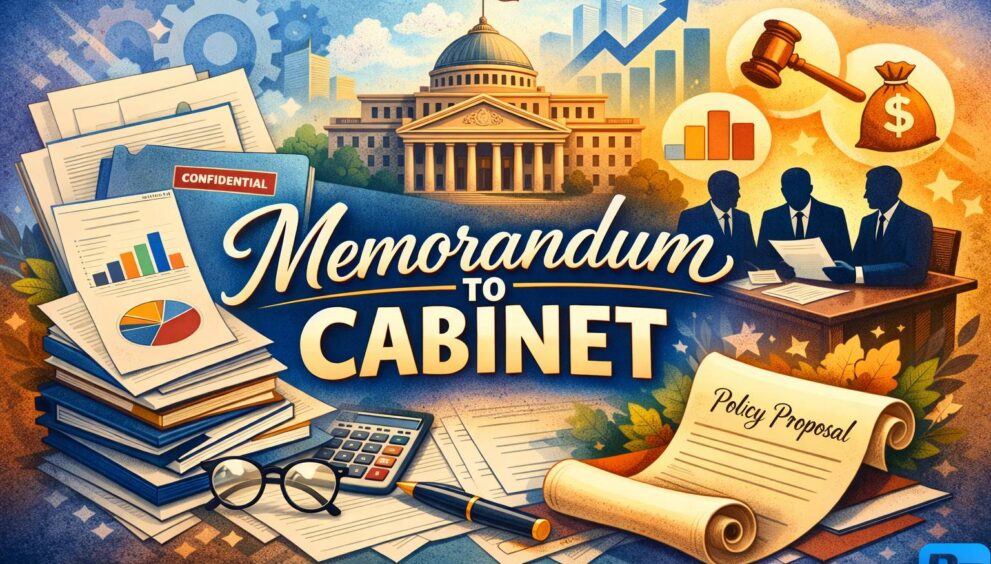
Government policy rarely begins with public announcements or legislation. Behind most major decisions is a structured internal process where departments present proposals, evidence, and recommendations to senior leadership. One of the most important documents in that process is the Memorandum to Cabinet, a key internal policy document used by governments to present proposals and request approval from senior ministers.
The Memorandum to Cabinet serves as both a briefing and decision-making tool. It allows cabinet members to understand the policy issue, review possible responses, and determine whether a proposal should move forward. By organizing complex policy information in a clear format, it helps ensure that government decisions are based on analysis, consultation, and coordinated planning.
Although citizens rarely see these documents directly, they play a central role in how modern governments operate. Departments use them to explain why action is needed, what alternatives exist, and how a decision could affect finances, legislation, and the public. Understanding how this document works helps clarify how policy ideas move from departmental planning to official government decisions.
What Does a Memorandum to Cabinet Mean in Government Decision Making
A Memorandum to Cabinet is an internal government document used to present a policy proposal or request for approval to the cabinet, which is the group of senior ministers responsible for executive decision making. It summarizes an issue, outlines possible responses, and recommends a specific option for ministers to consider.
The goal of the document is to ensure that decisions are informed, coordinated, and consistent with government priorities. Instead of acting as a simple request, the memorandum functions as a structured policy briefing that explains the issue in detail.
Officials must demonstrate why government action is required, how the proposal aligns with existing policies, and what consequences might follow from the approval. Because cabinet decisions affect legislation, public spending, and national priorities, the document must present evidence and analysis that allow ministers to evaluate the issue quickly and clearly.
Most governments that follow parliamentary traditions rely on this system. Departments prepare the document with input from policy experts, legal advisors, and financial analysts. By the time it reaches cabinet members, the memorandum reflects extensive internal review and consultation.
Confidentiality is another defining feature of the Memorandum to Cabinet process. Cabinet discussions rely on open debate among ministers, which is why these documents are usually protected from public release. This confidentiality allows policymakers to evaluate sensitive information and consider alternatives before announcing final decisions.
Why Governments Rely on This Document Before Major Policy Decisions
Governments rely on the Memorandum to Cabinet because complex policy decisions require careful coordination between ministries, budgets, and long-term political goals. A single proposal can affect multiple sectors, including finance, infrastructure, health services, and social programs.
The memorandum provides a structured method for examining these connections before committing public resources.
Another important function is ensuring that ministers receive consistent and well-organized information. Cabinet members often review several proposals during a single meeting. Without a standardized format, comparing policy options across departments would be difficult.
The document allows decision makers to focus on key facts, risks, and expected outcomes.
It also serves as an accountability mechanism inside government. Departments must justify their proposals using evidence, projected impacts, and cost estimates. If a proposal lacks clear benefits or introduces unnecessary risk, cabinet members can request revisions or reject it entirely.
In many cases, the memorandum also signals that a proposal has already undergone internal consultation. Departments are typically required to consult with finance ministries, legal authorities, and other affected agencies before submitting a request to cabinet.
What Information Is Typically Included in a Cabinet Submission
A Memorandum to Cabinet normally includes several core components designed to help ministers understand both the issue and the proposed solution.
The opening section explains the purpose of the document and clearly states the decision being requested. This ensures that cabinet members immediately understand why the proposal has been brought forward.
The background section follows with an explanation of the policy problem or administrative challenge. Departments outline the context, existing programs, and factors that make government action necessary. This section helps ministers see how the issue fits within broader national priorities.
Another important section presents policy options. Instead of offering only one solution, departments often outline several possible approaches. Each option may include advantages, risks, financial implications, and potential political considerations.
Presenting alternatives allows ministers to weigh trade-offs before selecting a preferred path.
Financial and implementation details usually appear toward the end of the document. These sections explain how the proposal would be funded, how quickly it could be implemented, and what departments would be responsible for delivering the policy once approved.
How Ministers and Officials Evaluate Proposals Before Approval
When cabinet members review a policy proposal, they are not simply deciding whether an idea sounds appealing. They evaluate a combination of evidence, feasibility, financial implications, and political impact.
The Memorandum to Cabinet provides the foundation for this evaluation by presenting analysis that supports or challenges the recommendation.
Ministers often focus first on the broader policy objective. They ask whether the proposal addresses a real problem and whether the proposed solution fits the government’s priorities. A well-prepared memorandum anticipates these questions and explains why action is necessary.
Financial implications receive equal attention. Cabinet must determine whether the proposed spending is realistic and whether the benefits justify the cost. This is why departments work closely with finance officials before submitting the document.
Implementation is another critical factor. Even strong policy ideas can fail if the government lacks the capacity to deliver them. Ministers therefore examine timelines, administrative responsibilities, and potential operational risks before granting approval.
How a Memorandum to Cabinet Influences Final Government Decisions
A Memorandum to Cabinet does more than simply present a policy idea. It shapes the discussion among ministers by organizing complex information into a structured format that supports decision making.
Because cabinet members must evaluate multiple proposals within limited time, the document helps them quickly understand the issue, potential solutions, and broader implications.
In many cases, the recommendation contained in the memorandum becomes the starting point for cabinet debate. Ministers may approve the proposal as presented, modify certain elements, or request additional analysis before making a final decision.
The document therefore plays a critical role in determining how policy ideas evolve before becoming official government actions.
Common Misunderstandings About Cabinet Memoranda and Public Access
One common misunderstanding is that these documents function like public policy reports. In reality, they are internal decision tools intended for ministers rather than the general public. Their purpose is to support discussion and debate within government before final policies are announced.
Another misconception is that a Memorandum to Cabinet automatically leads to policy implementation. Cabinet may approve the proposal, request revisions, or reject it entirely. The document begins a decision process rather than guaranteeing an outcome.
Some observers also assume the documents contain purely political arguments. In practice, they usually include detailed policy analysis, cost projections, and consultation summaries. While political considerations may appear, the overall structure focuses on evidence and practical feasibility.
Finally, people often expect these documents to be publicly available immediately. Because cabinet discussions are confidential, access to them is typically restricted for many years. This protects the decision-making process and allows ministers to evaluate options openly.
Conclusion
Policy decisions within government rarely emerge from informal discussions alone. They depend on structured analysis, coordinated planning, and careful evaluation by senior officials and ministers.
The Memorandum to Cabinet plays a central role in that process by organizing complex information into a clear framework for decision making. It ensures that policy proposals are carefully examined before governments commit resources, introduce legislation, or launch new programs.
Understanding how the Memorandum to Cabinet works helps explain how policy ideas move from internal planning to official government action. Although most citizens never see these documents directly, they remain one of the most important tools used to guide responsible government decisions.
Frequently Asked Questions (FAQs)
What is a Memorandum to Cabinet?
A Memorandum to Cabinet is an internal government document used to present policy proposals or request approval from senior ministers. It outlines the issue, policy options, financial implications, and recommended actions.
Who prepares a Memorandum to Cabinet?
Government departments usually prepare the document with input from policy experts, legal advisors, and financial analysts before submitting it to cabinet for review.
Why are Memorandum to Cabinet documents confidential?
They are confidential because they contain sensitive policy discussions and allow ministers to debate options openly before making final government decisions.
Does a Memorandum to Cabinet guarantee policy approval?
No. Cabinet members may approve, modify, or reject the proposal after reviewing the memorandum and discussing its implications.
When can the public access these documents?
In many countries, cabinet documents may become accessible after several years through national archives or freedom-of-information processes.