





























































































































5 Examples of Implicit Sentences Brainly With Simple Meanings

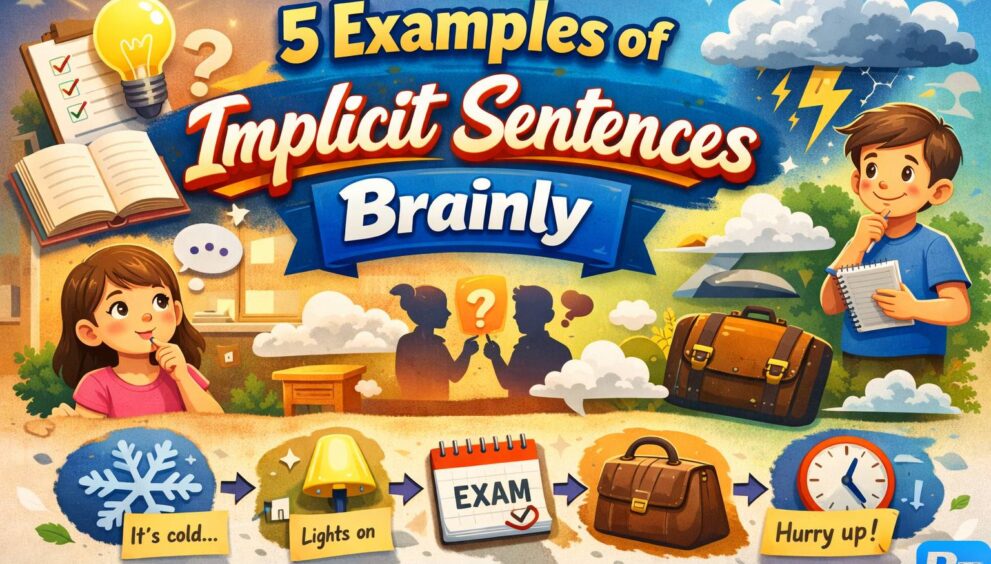
Students often search online for quick answers when they face language homework. A common task is identifying implied meaning inside ordinary statements rather than reading only the literal words. The phrase 5 Examples of Implicit Sentences Brainly usually appears when learners want ready answers, but many of those answers lack explanation. Without understanding the idea behind the examples, students memorize instead of learning.
This article focuses on understanding first and memorizing later. You will see clear examples, why they work, and how to detect similar sentences yourself. The goal is practical learning. After reading, you should be able to identify implied meaning in conversations, textbooks, and exams without needing to search for another list.
What is an implicit sentence in simple terms
An implicit sentence communicates a message without stating it directly. The listener understands the real meaning through context, tone, or situation. Instead of giving an order or explanation openly, the speaker hints at it. Everyday conversation depends heavily on this because people often prefer polite or indirect expression.
For example, when someone says, “It’s getting late,” they usually are not talking about the clock. They are suggesting ending a visit, finishing a meeting, or going home. The words stay neutral, but the intention becomes clear through circumstances. Understanding this difference between spoken words and intended meaning is the foundation of language comprehension.
Students struggle because they focus only on vocabulary definitions. Language, however, works socially. Meaning depends on shared understanding between speaker and listener. Exams test this ability because reading comprehension requires interpreting intention, not only grammar.
Once you stop searching for hidden grammar rules and start asking “Why did the speaker say this now?”, implicit meaning becomes easier to recognize.
What are five clear examples students can understand
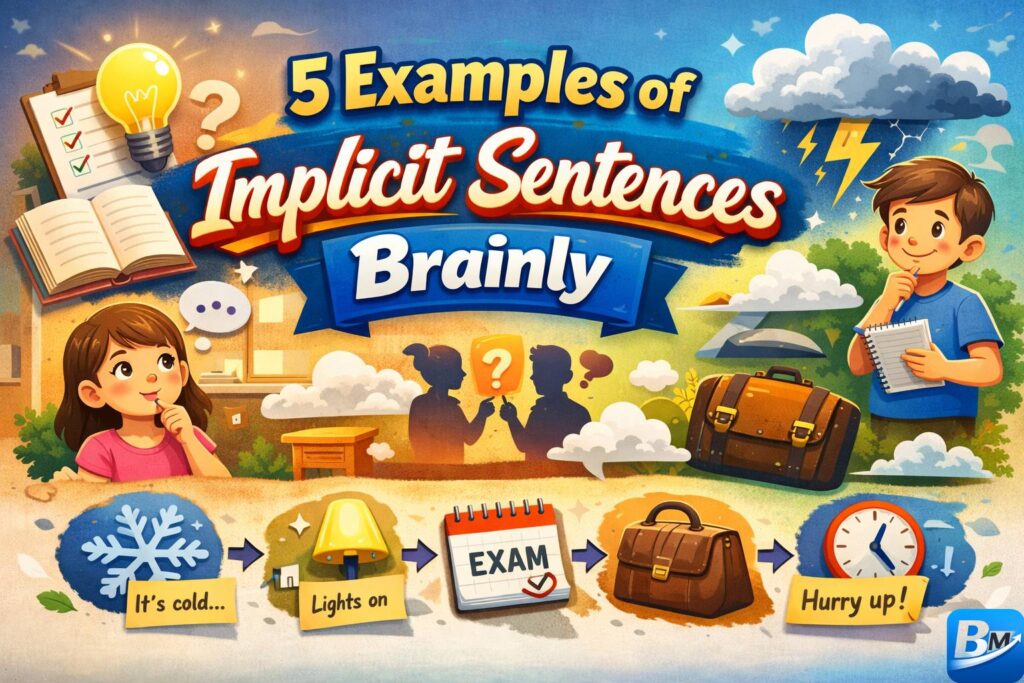
Below are simple situations where the real message differs from the literal sentence. Each example shows the spoken line and the intended meaning.
- “The room is very cold.”
Meaning: Please close the window or turn off the fan. - “You left the lights on.”
Meaning: Go back and switch them off. - “I have an exam tomorrow.”
Meaning: I cannot go out tonight. - “This bag is heavy.”
Meaning: Help me carry it. - “We’re running out of time.”
Meaning: Hurry up or finish quickly.
These examples work because they rely on shared context. No direct request appears, yet a request exists. Teachers often use similar sentences in comprehension exercises because they test reasoning rather than memorization.
If you can explain the hidden intention in your own words, you truly understand the sentence. If you only repeat the literal meaning, you have missed the purpose.
How to recognize the hidden meaning in everyday language
Start by checking whether the literal statement fits the situation. If the statement sounds unnecessary, it probably carries another message. People rarely say obvious things unless they want a reaction. A person standing beside an open door who says “It’s noisy outside” is likely asking to close it.
Tone and timing matter as much as vocabulary. The same sentence can change meaning depending on when it is spoken. “Nice job” can be praise or criticism. Context determines interpretation. Observing facial expression and situation improves understanding quickly.
Another useful method is asking what response the speaker expects. If a statement naturally demands action instead of information, it is implicit. When someone says “The trash is full,” the expected response is taking it out, not agreeing about its size.
Practice in daily conversation helps more than memorizing lists. Listening carefully trains comprehension better than reading rules.
Common mistakes learners make when identifying them
The biggest mistake is assuming every indirect sentence must contain difficult vocabulary. In reality, simple words often carry the strongest implied meaning. Students ignore ordinary lines because they look too basic, yet exam questions frequently rely on them.
Another mistake is focusing only on grammar structure. Implicit meaning does not depend on tense or parts of speech. A grammatically perfect sentence can still hide intention. Understanding depends on logic and situation, not technical terminology.
Learners also confuse implicit meaning with guessing. Guessing invents a random interpretation. Correct interpretation must match the context logically. If the meaning does not explain why the speaker spoke, it is probably wrong.
Finally, many students memorize examples without understanding the reasoning. When the exam changes wording, they cannot recognize the pattern anymore.
When should you use implicit communication in writing
Writers use implicit communication to sound natural and realistic. Real conversations rarely contain constant direct commands. Indirect expression makes dialogue believable and polite. It also allows the reader to participate by interpreting meaning.
In storytelling, implicit lines reveal relationships between characters. A character saying “You remembered my birthday” may express surprise, gratitude, or disappointment depending on the scene. This adds depth without lengthy explanation.
In academic writing, moderation is important. Instructions and definitions should remain direct, but examples and dialogue can be indirect to improve readability. Balance clarity with natural tone.
Using implicit meaning carefully improves communication because it respects the reader’s intelligence instead of explaining every detail openly.
Conclusion
Understanding implied meaning is more valuable than collecting sample answers. Once you learn to observe context, tone, and expected reaction, identifying such sentences becomes automatic. The five examples provided here are practice tools, not final answers to memorize.
Language works through shared understanding. Exams, conversations, and literature all depend on interpreting intention beyond literal wording. By focusing on reasoning rather than repetition, you develop a skill that applies far beyond one homework task.
FAQs
1. What does “5 Examples of Implicit Sentences Brainly” actually mean?
It usually refers to a homework-style question where students look for short sentences that contain a hidden message instead of a direct statement. The goal is not just listing sentences but explaining the intended meaning behind them. Teachers use this exercise to check whether students understand context and intention, not only vocabulary.
2. How can I quickly tell if a sentence is implicit?
Ask yourself whether the speaker expects an action instead of an answer. If the words state information but the situation suggests a response, the meaning is implied. For example, a person saying “The door is open” near a noisy hallway probably wants it closed.
3. Are implicit sentences always polite requests?
Not always. They can express refusal, warning, suggestion, or emotion. “I have work early tomorrow” may politely refuse an invitation, while “Those clouds look dark” may warn someone about rain.
4. Why do teachers include these questions in exams?
They test comprehension skills. Understanding language requires interpreting intention, tone, and context. Students who rely only on literal meaning struggle with reading passages and dialogues.
5. Can implicit meaning change depending on the situation?
Yes. The same sentence can mean different things in different contexts. “Nice going” may be praise during a game but criticism after a mistake. The situation determines the real message.