
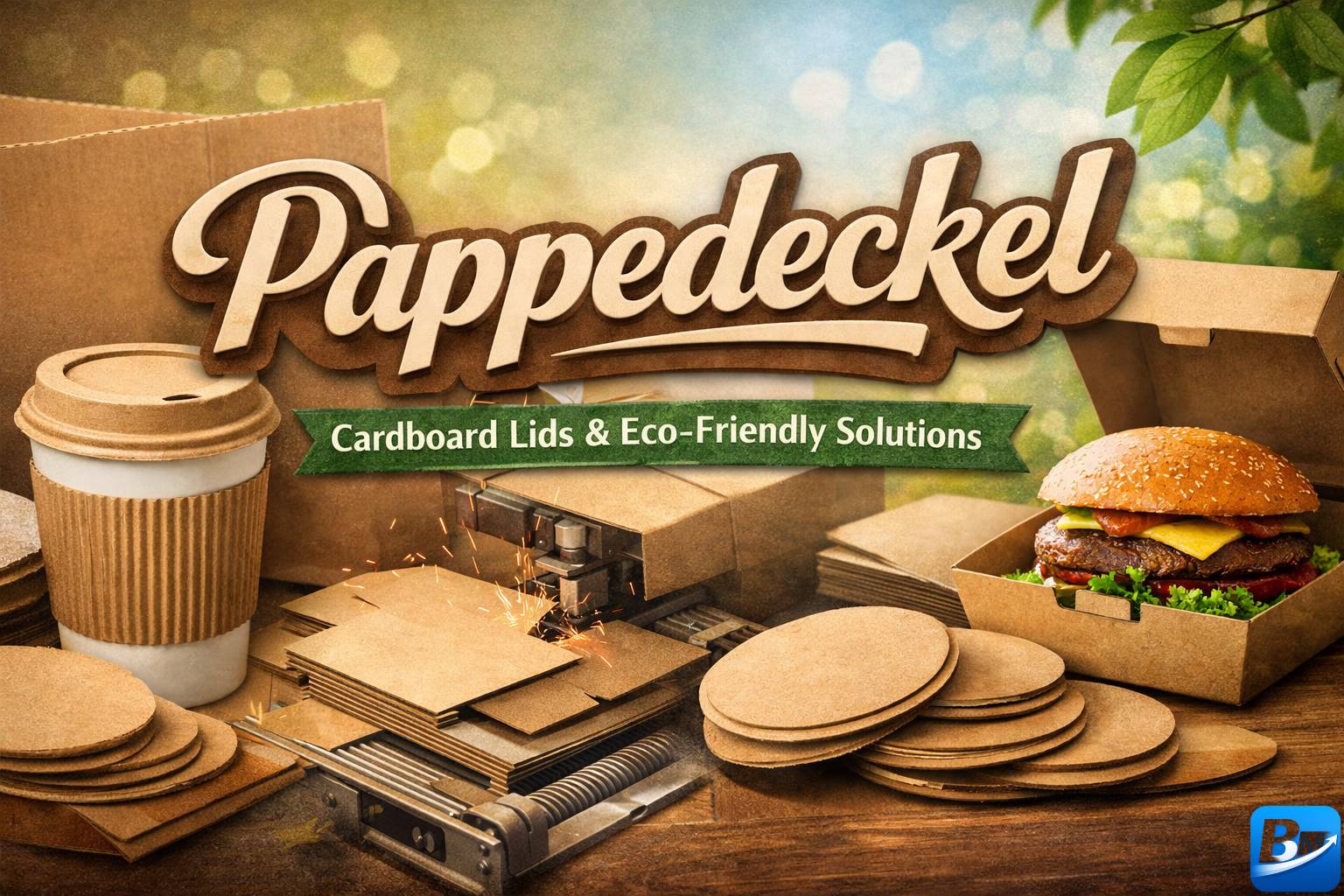
Cardboard lids, known in German as Pappedeckel, are essential components in modern packaging and sustainability-driven solutions. These seemingly simple items are used widely in the food, beverage, and packaging industries to protect, cover, and deliver products efficiently. Understanding the construction, applications, and environmental advantages of Pappedeckel is crucial for developers, packaging engineers, and sustainability professionals who design or specify packaging solutions. This article explores the technical aspects, benefits, and practical applications of Pappedeckel, providing a comprehensive reference for professionals.
What is a Pappedeckel?
Pappedeckel, literally translating to “cardboard lid,” is a manufactured cover made primarily from paperboard or recycled paper materials. These lids are designed to provide protective, functional, and sometimes decorative solutions for containers. Their structural integrity is determined by the type of fiber used, thickness of the cardboard, and the manufacturing process, which typically involves pressing, cutting, and coating the material to suit specific applications.
Technically, Pappedeckel is available in multiple forms, including flat lids, domed lids, and interlocking designs. Each variation is designed to fit particular container geometries and product types. For instance, flat lids are common in disposable food packaging, while domed lids are often used for beverages containing whipped cream or froth. Engineers must consider both the lid’s rigidity and its ability to withstand pressure or moisture during transport and storage.
The material composition directly affects the lid’s performance. High-density paperboard provides superior strength, while lightweight options reduce shipping costs. Additionally, surface coatings can offer water resistance or printability for branding purposes. The choice of material and coating is critical when considering environmental impact and recyclability.
Applications extend beyond functional usage; Pappedeckel often serve as marketing surfaces. Custom printing with logos, instructions, or decorative designs can enhance product visibility while remaining fully recyclable. This dual function as protection and communication medium makes Pappedeckel a versatile tool in product delivery systems.
Finally, Pappedeckel is gaining attention in research and innovation sectors. Advanced designs include biodegradable coatings, antimicrobial surfaces, and foldable structures that reduce storage space. Engineers and designers need to balance usability, cost, and environmental standards when selecting appropriate lids.
How are Pappedeckel Manufactured and Applied?
The manufacturing process for Pappedeckel begins with selecting appropriate paperboard materials, typically recycled fibers combined with virgin pulp for strength. The raw paperboard undergoes pressing, cutting, and forming to create uniform thicknesses and precise dimensions. Precision dies ensure that each lid conforms to container specifications, allowing for secure fits that prevent spillage or contamination.
Once formed, coatings and treatments are applied. Water-resistant layers or biodegradable films improve performance under specific conditions, such as hot beverages or moist foods. These treatments are carefully chosen to maintain recyclability and minimize environmental impact while enhancing durability and customer safety.
In industrial applications, automated systems handle both production and packaging. Pappedeckel can be supplied in bulk to manufacturers, who then integrate them into high-speed filling lines. Automated placement ensures consistency, reduces labor costs, and maintains hygiene standards, especially in food and beverage industries. Engineers must calibrate machinery to match lid dimensions and material characteristics for optimal efficiency.
For specialty applications, custom printing and embossing are often incorporated during production. Printing can include barcodes, brand logos, or QR codes for digital integration. Embossed surfaces provide tactile feedback and brand differentiation. These features are applied without compromising structural integrity, which requires precise coordination between design and manufacturing processes.
Finally, Pappedeckel can be adapted for sustainability initiatives. Some manufacturers employ modular designs, allowing lids to be reused multiple times in closed-loop systems. Others focus on fully biodegradable lids that decompose in composting facilities, aligning with circular economy principles. Understanding the full lifecycle of the lid is essential for responsible design and compliance with environmental regulations.
Why Choose Pappedeckel over Alternative Materials?
Choosing Pappedeckel offers multiple advantages compared to plastics, metals, or molded fiber alternatives. One primary benefit is sustainability. Being made from renewable and recyclable paper materials, Pappedeckel reduces environmental impact and supports eco-conscious branding initiatives. Lifecycle assessments consistently show lower carbon footprints compared to plastic lids.
Cost efficiency is another key factor. Paperboard lids typically require less energy to produce than plastic or metal alternatives. The lightweight nature of Pappedeckel reduces shipping costs while maintaining adequate strength and protection for most container types. This makes them ideal for large-scale food and beverage distribution systems.
Functionally, Pappedeckel provides flexibility in design. They can be engineered for different levels of rigidity, moisture resistance, and thermal stability, making them suitable for both hot and cold applications. In addition, their printable surfaces allow companies to integrate branding and regulatory information efficiently, eliminating the need for secondary labels.
Maintenance and disposal are simplified with Pappedeckel. Unlike plastic, which often requires specialized recycling streams, cardboard lids are widely accepted in standard recycling facilities. Biodegradable variants can be composted, offering an environmentally responsible end-of-life option. For businesses and consumers, this translates into both convenience and compliance with environmental regulations.
Finally, Pappedeckel supports innovation in packaging. Engineers can experiment with foldable or expandable designs, stackable structures, or multi-functional lids that serve both protective and user-interface roles. Such innovations can improve customer experience while reducing material waste, demonstrating the adaptability of Pappedeckel in modern packaging engineering.
Applications and Best Practices for Pappedeckel
Pappedeckel is extensively used in the food and beverage industry. Coffee cups, takeaway containers, and disposable plates often require lids that protect contents while remaining easy to remove. Engineers must select appropriate thicknesses and coatings to prevent leakage and maintain product quality during transport. Proper testing protocols, including stress and moisture resistance tests, ensure consistent performance.
Beyond food, Pappedeckel is used in industrial packaging. Items like small electronics or delicate components benefit from protective lids that reduce damage during storage and shipping. The ability to customize dimensions, shapes, and coatings allows precise alignment with product specifications. Manufacturers often integrate Pappedeckel into automated packaging lines to maintain efficiency.
Sustainability-focused applications are increasing in popularity. Pappedeckel can be integrated into circular economy systems where products are returned, cleaned, and reused. In compostable packaging programs, these lids decompose quickly and safely, aligning with eco-certifications and corporate social responsibility goals. Organizations using Pappedeckel can emphasize environmental stewardship in marketing and compliance reporting.
Best practices include careful material selection, thorough testing, and lifecycle planning. Designers should balance structural integrity with recyclability and cost considerations. For high-volume applications, consistency in dimensions and quality control is critical to prevent operational issues. Additionally, proper storage conditions prevent warping or moisture absorption before use.
Finally, branding and communication are integral to best practices. Using Pappedeckel as a medium for printed logos, product instructions, or QR codes enhances user engagement without introducing additional materials. When done correctly, this approach strengthens brand presence and maintains functional performance simultaneously.
Frequently Asked Questions (FAQs)
1. What is a Pappedeckel and what is it used for?
A Pappedeckel is a cardboard or paperboard lid used to cover and protect containers, primarily in the food, beverage, and packaging industries. It offers structural support, moisture resistance, and branding opportunities.
2. How is a Pappedeckel different from plastic lids?
Unlike plastic lids, Pappedeckel is recyclable, biodegradable, and typically lighter. It provides similar protective functions but with a lower environmental impact and often customizable surfaces for printing.
3. Can Pappedeckel be used for hot liquids?
Yes, Pappedeckel can be coated with water-resistant or heat-stable layers that allow safe use with hot beverages, preventing leakage and maintaining structural integrity.
4. Are Pappedeckel lids sustainable?
Most Pappedeckel are made from recycled fibers and can be recycled or composted. Biodegradable coatings further enhance environmental sustainability, making them eco-friendly alternatives to plastic.
5. What industries commonly use Pappedeckel?
The primary industries are food and beverage, packaging, industrial shipping, and branding. Coffee shops, restaurants, and manufacturers frequently use these lids for protection and promotional purposes.