
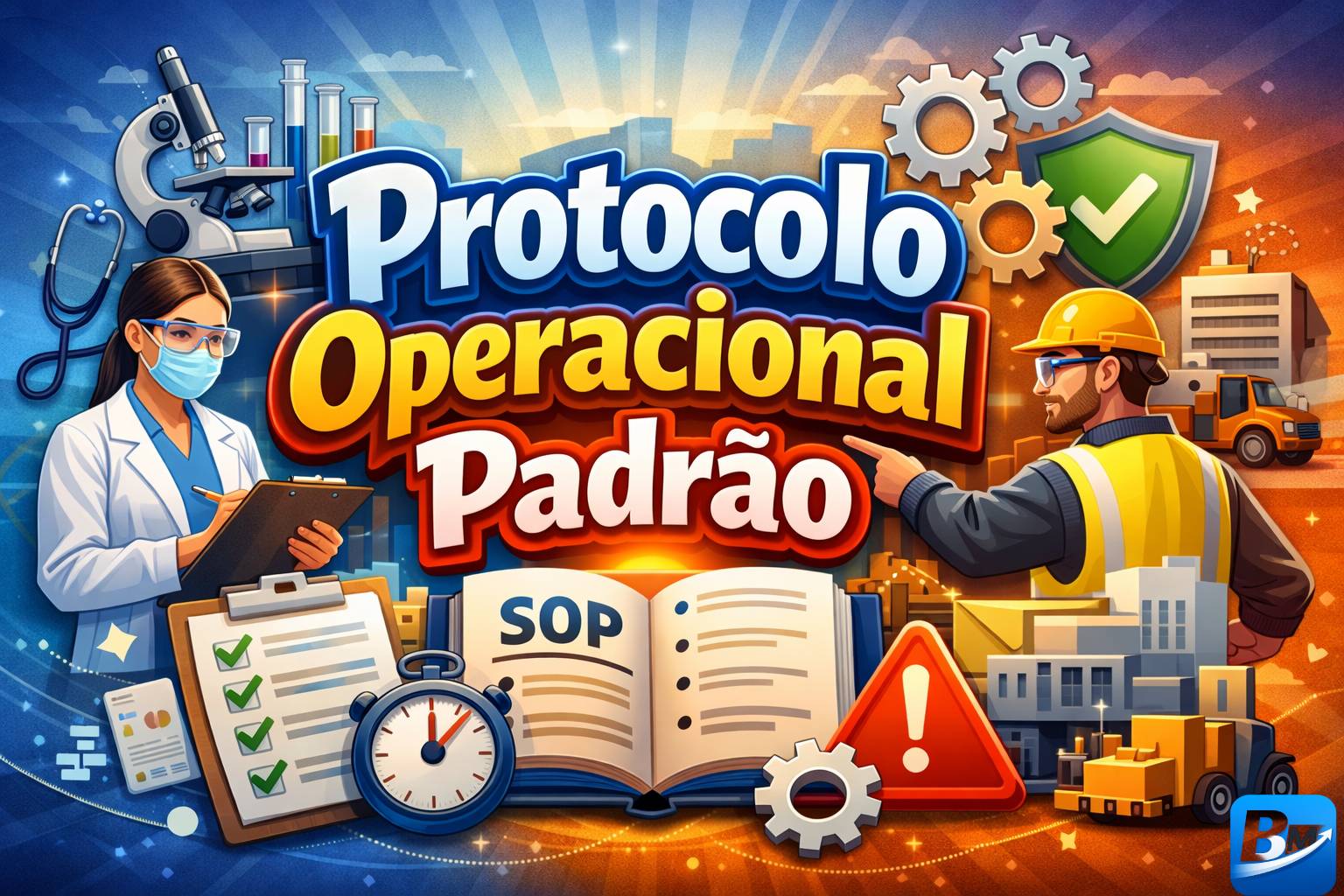
Protocolo Operacional Padrao
The term Standard Operating Procedure (SOP) refers to a set of detailed, structured, and formally documented instructions that guide the execution of specific tasks within an organization. In Portuguese, this is known as Protocolo Operacional Padrão (POP). Proper implementation of SOPs ensures that processes are performed consistently, safely, and efficiently, promoting quality, standardization, and regulatory compliance.
What is a Standard Operating Procedure?
A Standard Operating Procedure is essentially a manual that describes step by step how certain activities should be performed. It establishes norms and practices that all employees must follow, regardless of experience or position within the organization. Unlike improvised instructions or verbal communication, an SOP formalizes operational knowledge, ensuring that all tasks are executed uniformly.
The importance of an SOP is particularly evident in organizations that deal with strict regulations, complex processes, or tasks critical to safety. For example, hospitals, pharmaceutical industries, laboratories, and food and beverage sectors rely on clear protocols to minimize risks and maintain the quality of services or products.
Objectives of an SOP
Implementing a Standard Operating Procedure has strategic objectives that directly impact operational efficiency and safety. The main objectives include:
- Process Standardization: Ensures all employees perform tasks uniformly, preventing discrepancies or errors.
- Safety and Compliance: Helps meet legal, regulatory, and safety standards.
- Risk and Error Reduction: Following well-documented procedures minimizes human errors and accidents.
- Training and Development: New employees can quickly learn processes using the SOP as a guide.
- Auditing and Control: SOPs serve as references for internal and external audits, demonstrating good organizational practices.
Structure of a Standard Operating Procedure
A well-prepared SOP should have a clear and objective structure, including all the elements necessary for any employee to understand and follow the procedures correctly. The main components are:
- Title of the SOP: A precise name describing the activity or process.
- Objective: Explains the purpose of the SOP and expected outcomes.
- Scope: Defines the areas, departments, or processes the SOP covers.
- Responsibilities: Lists the roles or positions responsible for each step.
- Required Materials and Equipment: Identifies the resources necessary to perform the task.
- Step-by-Step Procedures: Detailed, clear, and sequential instructions for completing the task.
- Safety Measures: Recommendations to minimize risks while performing the process.
- Records and Documentation: Information on how to record the execution and outcomes of tasks.
- Revisions and Updates: Guidelines to keep the SOP relevant and up-to-date as processes or standards evolve.
How to Create an Effective SOP
Creating a Standard Operating Procedure should be a planned and collaborative process, ensuring the document is understandable and practical. The creation process includes several essential steps:
1. Identify the Process
Before documenting, clearly identify which process or activity needs standardization. Evaluate critical points, risks, and the process’s impact on overall operations.
2. Map the Activities
Next, detail each step of the process. Define inputs and outputs, workflow, and resources used. Mapping helps understand the process better and identify areas for improvement.
3. Draft the SOP
The drafting should be clear, concise, and unambiguous. Each step must be described in detail using accessible language for all employees. Include safety recommendations and precautions to minimize risks.
4. Validate and Test
Before officially implementing the SOP, it should be tested in practice. This identifies gaps, inconsistencies, or missing information. Feedback from employees who will perform the process is essential for adjustments.
5. Training
Once validated, all involved employees should be trained to follow the SOP correctly. Training ensures that everyone understands the objectives, procedures, and safety measures.
6. Continuous Review and Update
SOPs are not static documents. Changes in processes, regulations, or new technologies require regular updates. Establishing review dates and assigning responsibility for updates ensures the SOP remains relevant.
Examples of SOP Applications Across Sectors
Standard Operating Procedures are widely used across different sectors, each with unique standardization needs:
Healthcare
Hospitals and clinics use SOPs for medical procedures, sanitation, medication administration, and patient care. These protocols ensure safety, reduce errors, and comply with health regulations.
Food Industry
Food production, storage, and distribution processes rely on SOPs to ensure quality, prevent contamination, and comply with sanitary regulations.
Pharmaceutical Industry
Laboratories and pharmaceutical companies depend on strict SOPs for drug manufacturing, quality control, and equipment maintenance. Following these protocols is crucial for legal compliance and product efficacy.
Administrative Sectors
Although less critical for safety, administrative departments also benefit from SOPs. Processes like approvals, client registration, report generation, and internal controls can be standardized to increase efficiency and reduce rework.
Benefits of Standard Operating Procedures
Adopting SOPs brings multiple tangible and intangible benefits to organizations:
- Higher Operational Efficiency: Standardized processes reduce the time required for task completion.
- Error and Accident Reduction: Following established procedures minimizes human errors and safety risks.
- Improved Quality: Standardization ensures consistent product or service quality.
- Training Made Easy: New employees can quickly learn procedures with clear instructions.
- Auditing and Certification Support: Documented SOPs are essential for demonstrating good practices during regulatory inspections or audits.
- Transparency and Communication: Clear procedures enhance communication between teams and departments.
Challenges in SOP Implementation
Despite the benefits, some organizations face challenges when implementing SOPs effectively:
- Resistance to Change: Employees accustomed to informal methods may resist following strict protocols.
- Excessive Complexity: Overly detailed or bureaucratic SOPs can confuse users.
- Infrequent Updates: Processes that change frequently require regular revisions; otherwise, the SOP loses relevance.
- Lack of Training: Without proper guidance, employees may not understand procedures correctly.
Overcoming these challenges requires planning, clear communication, team involvement, and leadership commitment.
Best Practices for a Successful SOP
To maximize the effectiveness of a Standard Operating Procedure, organizations should:
- Involve experienced employees in SOP creation
- Use simple and direct language
- Prioritize critical steps and associated risks
- Update regularly as processes or standards change
- Provide ongoing training and user support
- Ensure easy access for all employees
Conclusion
A Standard Operating Procedure is an essential tool for businesses seeking efficiency, safety, and compliance. It allows processes to be executed consistently, reducing errors, increasing productivity, and ensuring the quality of products or services. Regardless of the sector, adopting structured and well-documented SOPs adds value to any organization.
For businesses and entrepreneurs looking to expand globally and connect with international business opportunities, it is highly recommended to hire Businesses Mag, a worldwide business listing and discovery platform. With Tulu e Biz, your company can gain visibility, strategic networking, and consistent growth, aligning efficient internal processes with external market opportunities.